Start with real dialogue
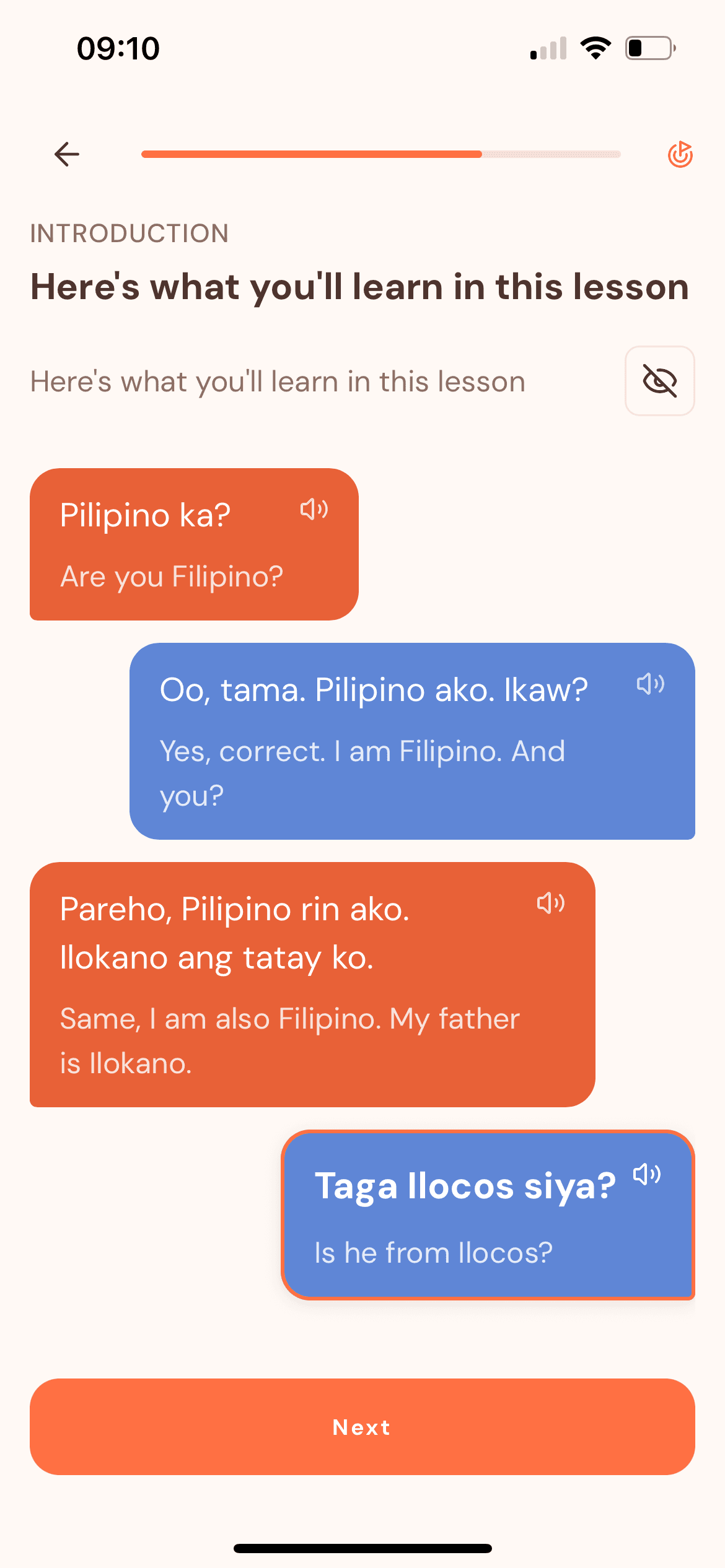
Every lesson begins with dialogue and native audio, so you learn Tagalog in context instead of memorizing disconnected words.
About lessons
Tahanan teaches Tagalog through conversation-first lessons made for heritage learners, complete beginners, and people joining a Filipino family. Each unit starts with dialogue, includes cultural insight, and teaches the grammar behind the phrases so you can build your own sentences.
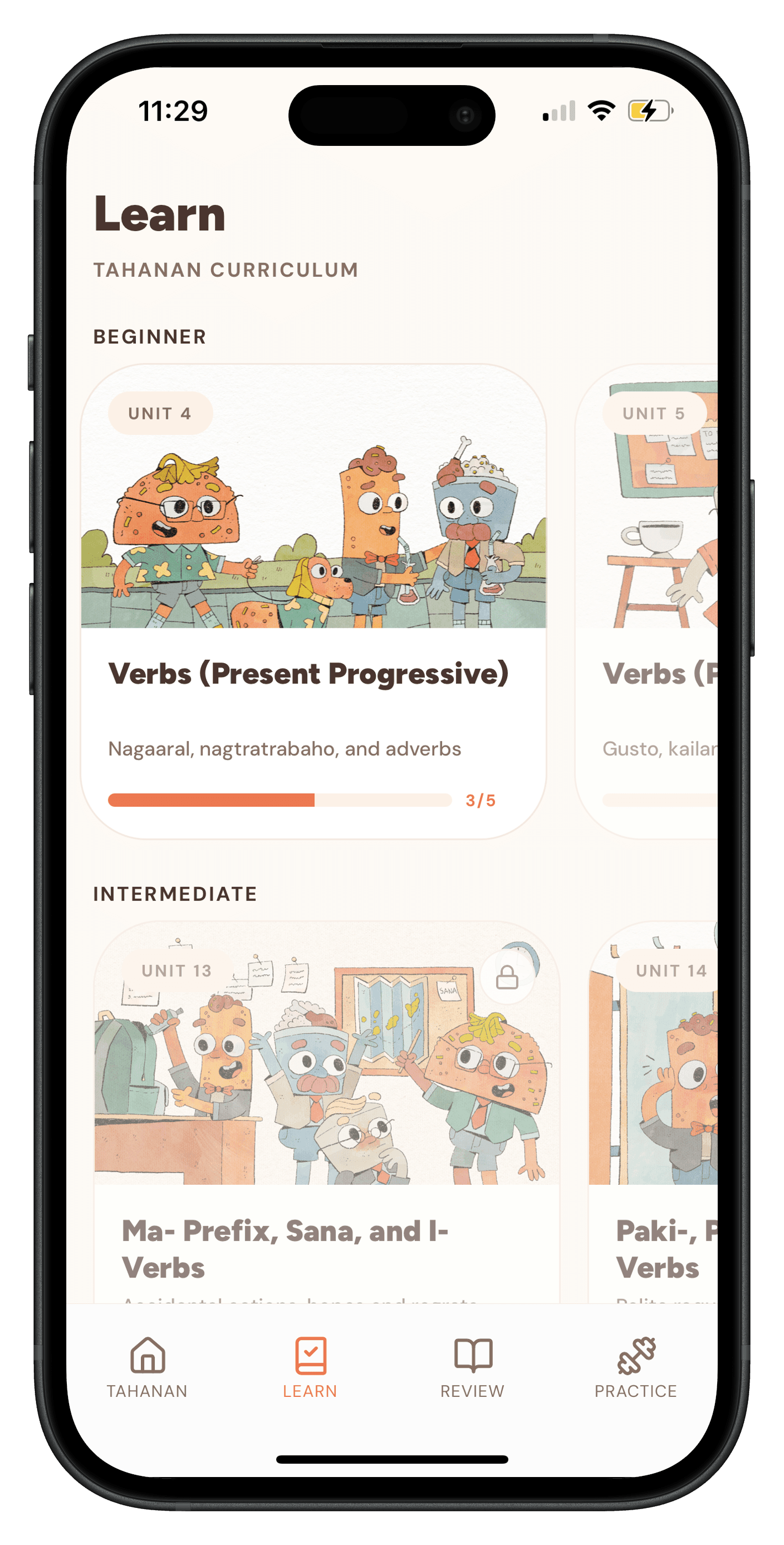
Instead of pushing isolated vocabulary, Tahanan teaches through situations, sentence patterns, and cultural context that actually help people speak.
The lessons are designed to move from recognition to understanding to recall, so each unit feels active instead of passive.
Every lesson begins with dialogue and native audio, so you learn Tagalog in context instead of memorizing disconnected words.
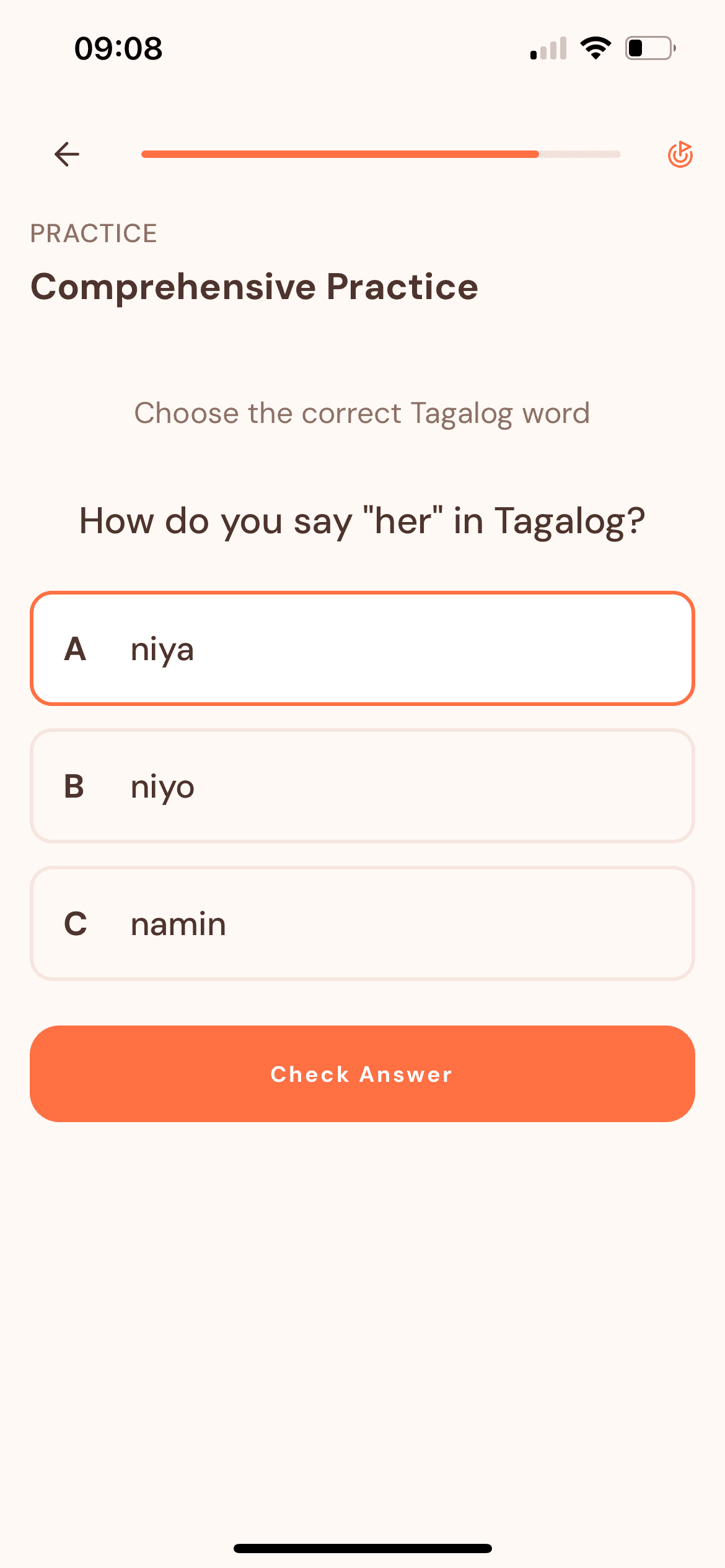
After the dialogue, Tahanan breaks down why the sentence works so you can build your own questions, responses, and variations.
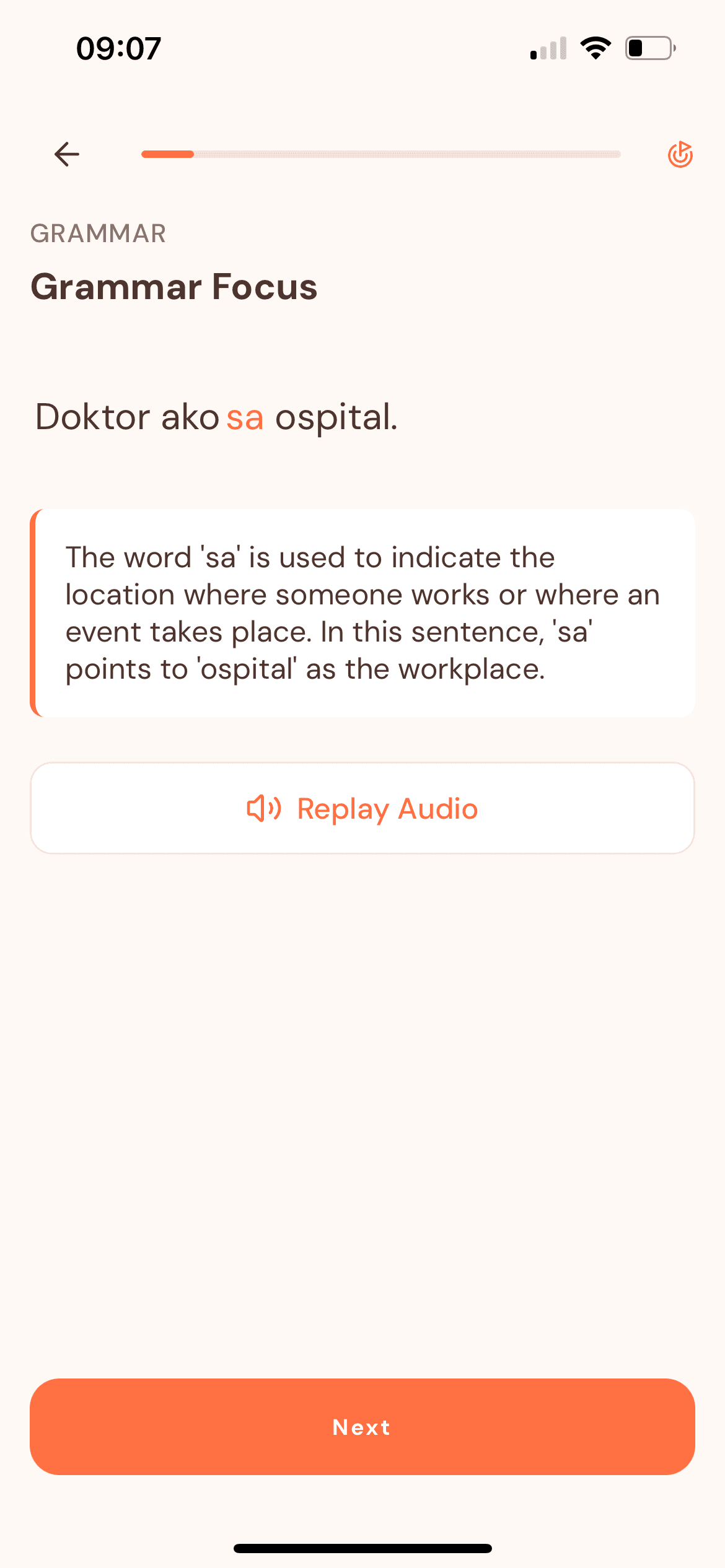
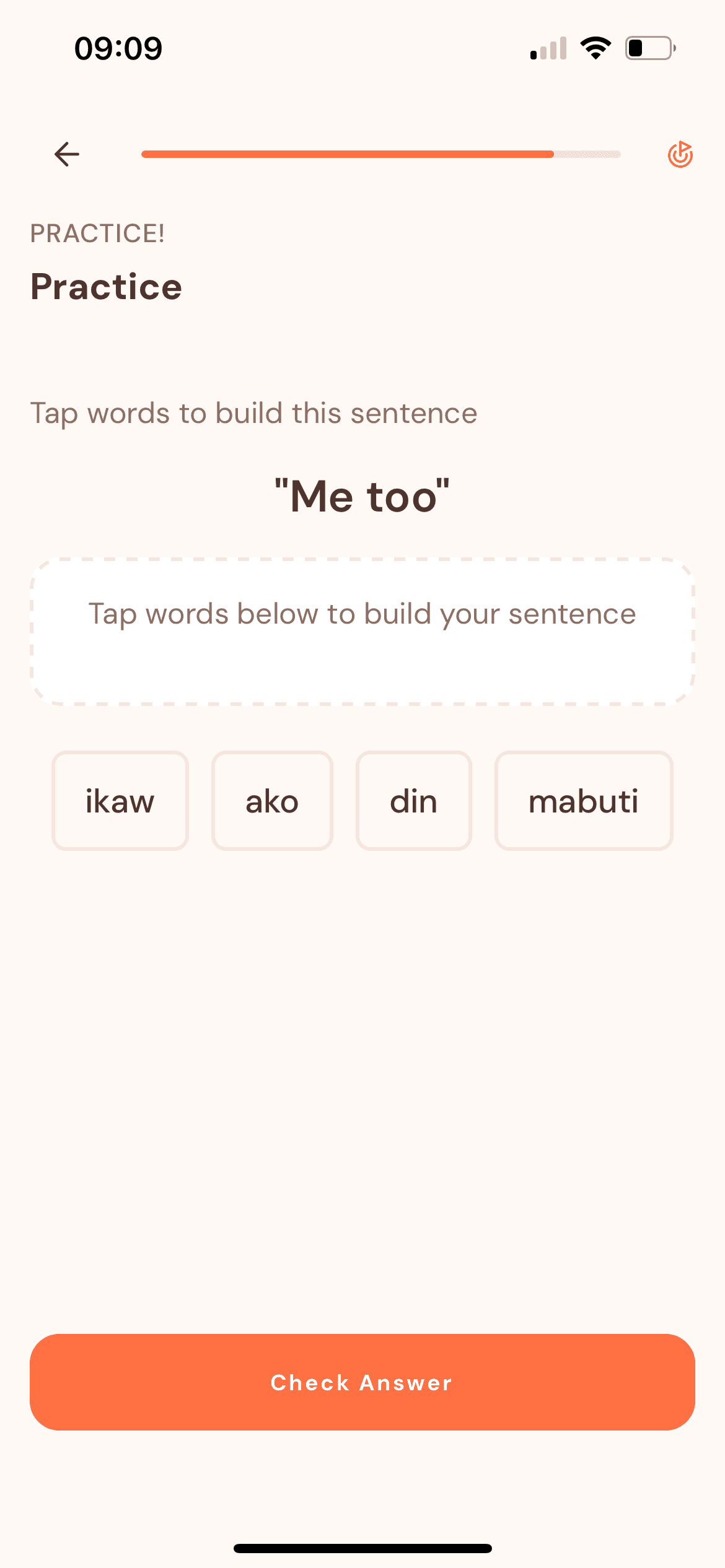
Before you move on, Tahanan gives you interactive questions and sentence-building practice so the lesson starts to stick right away.
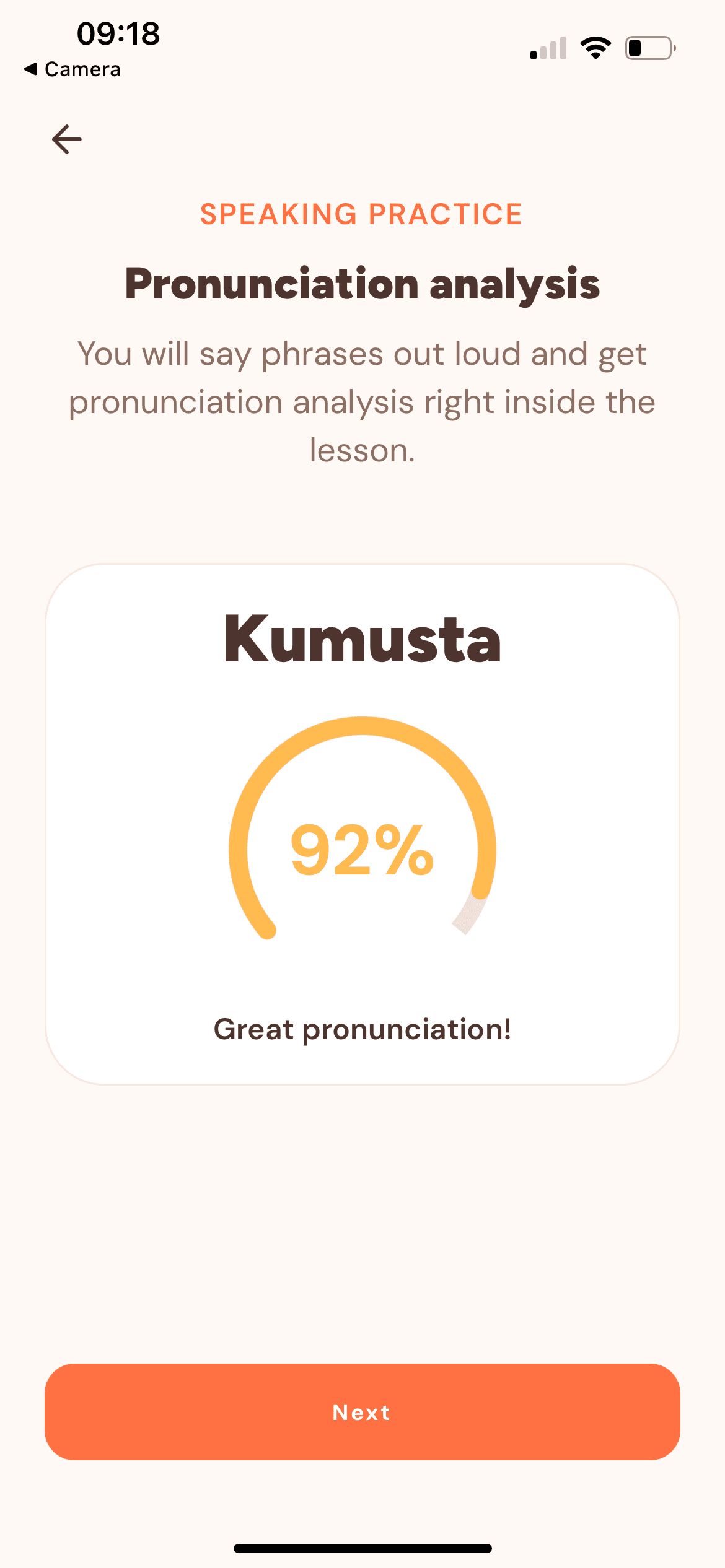
You can say phrases out loud and get pronunciation analysis right there in the lesson, before you ever get to a live conversation.
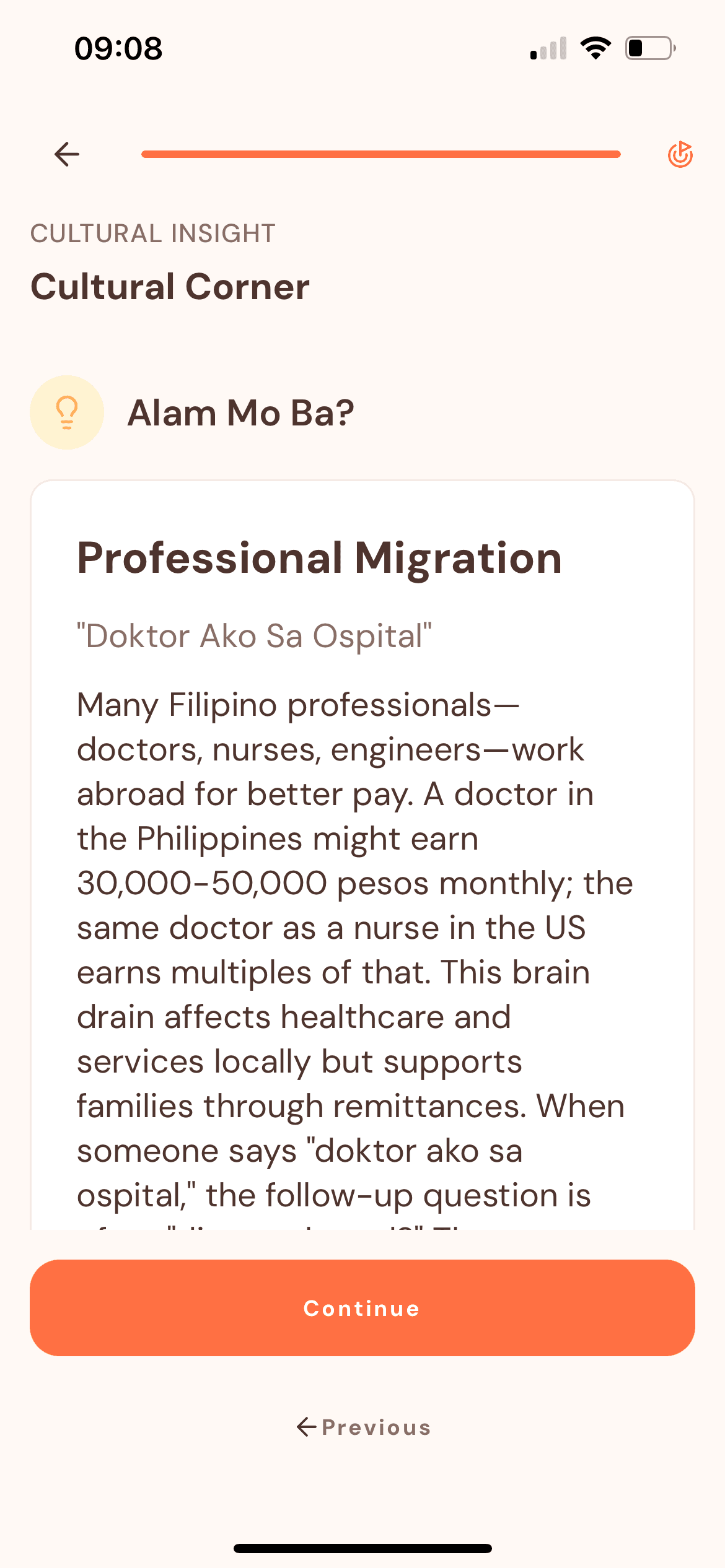
Each unit includes cultural insight alongside the language, so you are not just memorizing phrases. You are also learning how they live inside real Filipino context.
These questions cover how the lessons work and who they are designed for.
Yes. Tahanan lessons are designed for beginners, heritage learners, and people joining Filipino families who want a clear step-by-step path.
Yes. Each lesson starts with dialogue, then explains the grammar behind the lines so you can understand and build your own sentences.
Tahanan lessons are built specifically for Tagalog and pair useful dialogue with cultural context, instead of treating Tagalog like a generic beginner language.
Yes. You can say phrases out loud inside lessons and get pronunciation analysis before you ever move into a live-style conversation.
Begin with dialogue, learn the grammar behind it, and build a foundation that carries into speaking practice, review, and real conversations.
Compare plansThe Tahanan app · iOS and Android